

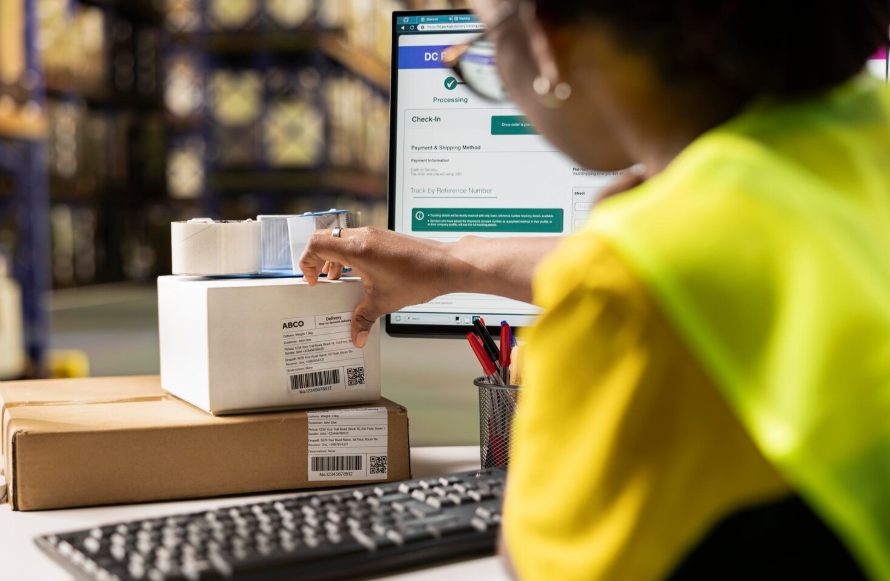
In the vast and diverse landscape of India, where urban centers bustle alongside remote villages, the efficient movement of goods relies on precise addressing systems. PIN codes, those six-digit identifiers, form the foundation of this process, particularly in the booming e-commerce sector. As online shopping surges, with millions of parcels traversing the country daily, understanding how these codes streamline logistics becomes essential. They not only guide deliveries but also influence inventory decisions, cost calculations, and customer satisfaction across platforms like Flipkart and Amazon India. This exploration delves into their multifaceted importance, highlighting how they enable seamless operations in one of the world’s fastest-growing digital markets.
Understanding the Structure and History of PIN Codes
PIN codes, short for Postal Index Numbers, consist of six digits that categorize India’s geographical areas for postal purposes. The first digit represents one of nine postal zones, such as 1 for Delhi and Punjab, while the second refines it to a sub-region. The third digit pinpoints the sorting district, often centered around a major city, and the remaining digits specify the delivery post office. This hierarchical setup ensures mail and parcels are routed systematically from national hubs to local branches.
Introduced on August 15, 1972, by the Department of Posts, the system aimed to overcome challenges like duplicate place names and multilingual addresses that complicated manual sorting. Before this, deliveries were prone to errors, delaying essential communications and goods. Today, with over 150,000 post offices handling distribution, PIN codes extend their utility beyond traditional mail to modern logistics, supporting the integration of technology in tracking and routing.
In e-commerce, this structure allows platforms to verify addresses instantly during checkout, preventing orders from being placed in unserviceable areas. For instance, a code starting with 56 might indicate Bangalore, enabling quick assessment of warehouse proximity and transit times. This foundational role has evolved with digital tools, making PIN codes indispensable for scaling operations in a market projected to grow at a compound annual rate of over 20% through 2034.
Address Verification: The First Line of Defense in Online Retail
Accurate address verification stands as a critical step in e-commerce transactions, where PIN codes serve as the primary validator. When customers input their details, systems cross-reference the code against databases to confirm serviceability, reducing the risk of failed deliveries that cost businesses dearly in returns and refunds. Logistics providers like Delhivery use these codes to map out feasible routes, ensuring parcels reach even Tier-3 cities efficiently.
This process also aids in fraud prevention by flagging inconsistencies, such as mismatched codes and street names. In a country where informal addresses are common, relying on landmarks or vague descriptions, PIN codes provide a standardized anchor. Reports indicate that about 8% of customers enter incorrect codes, leading to rerouting efforts that inflate operational costs. To mitigate this, e-commerce giants integrate auto-suggest features based on code inputs, enhancing user experience and order accuracy.
From a broader perspective, this verification supports data analytics, allowing companies to identify high-demand zones. For example, codes in metropolitan areas like 110001 for Central Delhi reveal patterns in consumer behavior, informing targeted marketing and stock allocation. As India’s e-commerce penetrates deeper into rural areas, covering over 27,000 PIN codes, this mechanism ensures inclusivity, bridging urban-rural divides.
Boosting Delivery Efficiency and Accuracy
Delivery efficiency hinges on the precision that PIN codes offer, enabling logistics networks to optimize routes and timelines. In e-commerce, where same-day or next-day promises are standard, codes help determine the nearest fulfillment center, minimizing transit distances. This is evident in how providers calculate shipping fees dynamically, factoring in code-based zones to balance speed and cost.
Accuracy improvements stem from the codes’ role in last-mile navigation. Delivery personnel use them alongside GPS to locate addresses in densely populated or remote locales, where street-level details might be absent. Challenges like poor road infrastructure in certain codes are addressed through partnerships with local post offices, leveraging their extensive reach. Statistics show that effective use of these codes can reduce delivery failures by up to 15%, directly impacting customer retention.
Moreover, in cash-on-delivery models prevalent in India, PIN codes facilitate secure transactions by verifying locations against payment histories. This integration with digital payments systems, as seen in platforms supported by Unified Payments Interface, streamlines the entire process from order to handover.
Inventory Management Through Hyperlocal Insights
PIN codes unlock hyperlocal data for inventory management, allowing e-commerce firms to stock products based on regional demand. By analyzing sales trends per code, businesses can predict needs, such as higher demand for winter apparel in northern codes versus summer essentials in southern ones. This granular approach prevents stockouts in high-volume areas and overstock in low-demand zones, optimizing warehouse space and reducing holding costs.
Tools that aggregate code-level insights enable dynamic replenishment. For fashion retailers, codes in affluent urban areas might prioritize premium items, while rural codes focus on essentials. This strategy is crucial in a market where 60% of online orders now originate from Tier-2 and smaller cities, driving the need for localized warehousing.
Competitive analysis also benefits, as companies benchmark performance against rivals in specific codes. Platforms like 42Signals provide dashboards for such monitoring, aiding in supply chain agility. In industries like electronics, aligning inventory with code-specific preferences enhances turnover rates and profitability.
Overcoming Challenges in PIN Code Implementation
Despite their strengths, PIN codes face hurdles in e-commerce logistics, including inaccuracies from user errors and limitations in covering new developments. In rapidly urbanizing areas, outdated codes can lead to misdeliveries, prompting the need for regular updates from authorities.
Solutions involve AI-driven address correction systems that validate inputs in real-time. Logistics firms invest in mapping technologies to supplement codes with geocoordinates, improving precision. Additionally, educating consumers on correct usage through app prompts reduces discrepancies, as seen in campaigns by major players.
Regulatory support, such as the National Logistics Policy, encourages standardization, fostering collaborations between e-commerce and postal services. These efforts address coverage gaps, ensuring even remote codes benefit from efficient deliveries.
The Emergence of DIGIPIN: Revolutionizing Precision
DIGIPIN represents a significant advancement, shifting from broad six-digit codes to precise 10-character alphanumeric identifiers. Developed by the Department of Posts with IIT Hyderabad and ISRO, it assigns codes to 4m x 4m grids, enabling exact location mapping without personal data storage.
In e-commerce, DIGIPIN eliminates ambiguities in last-mile delivery, reducing returns and speeding up processes. It supports rapid commerce models, where deliveries within hours are expected, by integrating with GIS for route optimization. This system enhances interoperability across platforms, benefiting sectors like groceries and pharmaceuticals.
Adoption involves generating codes via official portals, allowing users to share precise details for services. As India aims for a $100 billion e-commerce logistics market by 2034, DIGIPIN’s rollout promises to cut inefficiencies and boost economic activity in underserved regions.
Supply Chain Optimization and Future Trends
PIN codes drive supply chain optimization by facilitating data-driven decisions on warehousing and transportation. Aggregated code data reveals demand fluctuations, enabling predictive analytics for peak seasons like festivals. This leads to efficient resource allocation, with logistics valued at billions growing alongside e-commerce.
Future trends include deeper tech integration, such as drones and AI for code-based routing. Sustainability efforts, like electric vehicles in urban codes, align with green logistics goals. As cross-border e-commerce expands, standardized codes aid international compliance.
Comparing Traditional PIN Codes and DIGIPIN
| Aspect | Traditional PIN Codes | DIGIPIN |
|---|---|---|
| Format | Six digits | 10-character alphanumeric |
| Precision | Broad area (e.g., neighborhood) | Exact location (4m x 4m grid) |
| Applications | Basic sorting and delivery | Advanced logistics, emergencies, e-commerce |
| Limitations | Ambiguities in dense or rural areas | Requires digital adoption |
| Benefits in E-Commerce | Serviceability checks, cost estimation | Reduced delays, precise last-mile delivery |
| Development | Introduced 1972 | Launched 2025, with IIT and ISRO |
This table illustrates how DIGIPIN builds on traditional systems to meet modern demands.
FAQ: Common Questions on PIN Codes in E-Commerce Logistics
What happens if a wrong PIN code is entered during online shopping?
Systems often flag errors, suggesting corrections based on address details. If undetected, it may lead to delays or rerouting, increasing costs for the seller.
How do PIN codes affect shipping charges?
Charges vary by code distance from warehouses; remote codes incur higher fees due to extended logistics.
Can DIGIPIN replace traditional PIN codes entirely?
No, it complements them, offering finer precision while maintaining backward compatibility.
Why are some PIN codes not serviceable by e-commerce platforms?
This stems from logistics limitations, like infrastructure gaps or low demand, though coverage expands yearly.
How can businesses leverage PIN code data for growth?
By analyzing trends, they can tailor inventories and marketing, focusing on high-potential codes.
What role do PIN codes play in returns management?
They streamline reverse logistics by directing returns to appropriate hubs, speeding refunds.
Are there tools for verifying PIN codes?
Yes, APIs from postal services and third-party providers offer real-time validation.
How has the growth of e-commerce influenced PIN code usage?
It has intensified their application in data analytics and automation, driving innovations like DIGIPIN.
Wrapping Up: The Enduring Impact and Next Steps
PIN codes remain pivotal in shaping India’s e-commerce logistics, from basic addressing to advanced optimization. Their evolution, marked by DIGIPIN’s introduction, addresses longstanding challenges, fostering efficiency in a market poised for exponential growth. Businesses benefit from reduced operational hurdles, while consumers enjoy reliable deliveries, contributing to economic inclusivity.
For stakeholders, adopting code-centric strategies is key—integrate verification tools, analyze hyperlocal data, and explore DIGIPIN for precision. As technology advances, staying updated through resources like Boston Consulting Group reports ensures competitiveness. Reflecting on this, the humble PIN code continues to power connections in India’s digital economy, promising a future of seamless, accessible commerce.